
Zižek the wizard
on reading the introduction to Surplus-Enjoyment: A Guide for the Non-Perplexed

The last book report on was some analytical philosophy, the book A Moral Theory of Liveliness: A Secular Interpretation of African Life Force by Kirk Lougheed.
So time to try to read some more continental philosophy, what better than Slavoj Zižek and his 2022 work on our topsy-turvy world Surplus-Enjoyment: A Guide for the Non-Perplexed.
This one I found in my local library. I am not waiting to finish it before making my report as I did with the Lougheed, as I am feeling the pressure to write, and I want to write about wizards and not any “surplus enjoyment”… oh… —wait.
Zižek’s book opens with things I have also noticed, things have become their opposites. Anti-vaxxer sentiment is no longer the perview of hippies worried about holistic healing… —the wellness industry has transformed that with a cottage industry intensity into a platform for right wing nuttery with violent street demonstrations. And any off-beat schizophrenic’s theory… —now become a conspiracy theorizing activism. Techonological hope… —tech bros who thinking breaking things and running away is some kind of success story.
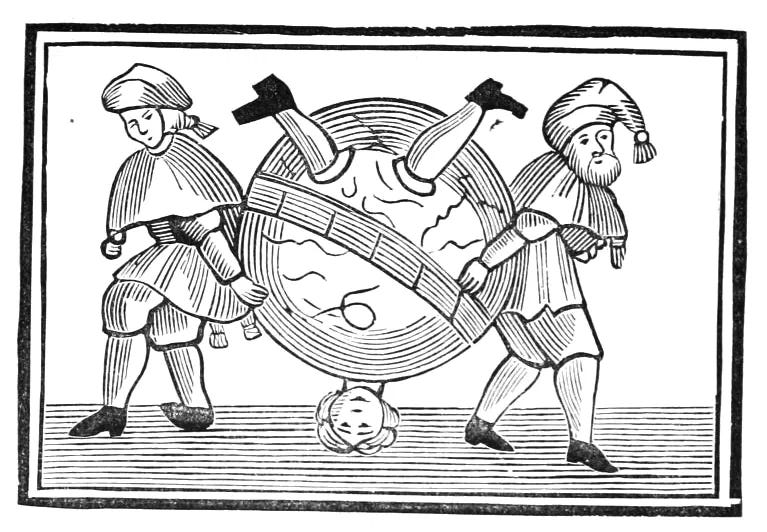
Zižek has his own examples. He does not seek to understand them, so as not to explain them away, they are part of Günther Ander‘s naked apocalypse. Here we are. And Zižek says he seeks to perplex the unperplexed in order to come about to some ?structure? we are messed up in, but due to historicism’s cage we cannot percieve. Zižek is nodded at Hegel here.
And, ‘historicism’ here means we are trapped with a view from nowhere that does the explaining of less than nothing, and, I would add, despite our partialities, we cannot understand our current predicament. Just as we cannot truly understand past epoches on their own terms, we cannot understand our own with the past, with our old world order’s Order, because it is all topsy-turvy. Here we are.
Zižek’s perplexity complex is a metaphor much like Gandalf’s fireworks.
Thus it is the wizard has arrived in town with a singular purpose to save the world, yes even Zižek has a worlding urge, and lights the fireworks to attract a crowd, writing salvation in the sky.
“…Yes, this century will be Hegelian.”
Yes, the world is a mess, or at least messed up, I agree, but there is no need to go all Hegelian on its ‘ass’. Even with ‘safety’ now, again, become an instrument of torture.
So I agree with the project, the diagnosis, but not, I suspect, the prescription, nor I hasten to add with Roger Scruton’s prescription. Both born out of the worlding urges’ behest to should something into place, this world-thing, in order to save something that does not need saving. This is the wizard’s mistake, I hope to see it avoided when I read the rest of the book.
“Save me,” says the world, we cannot help but respond. We cannot see this is how we make the world. Always. It can be done well, it can be done badly.
It is better to think of some writers, who may or may not be gainfully employed as philosophers, as wizards. Some are good, some are bad… — at worlding, some are mere mountebanks and illusionists, who do well in a topsy-turvy world, and make it so, to suit themselves. Like any grub.
One immediately thinks of continentals in this charge of wizardry. My nodding agreement with Zižek’s descriptions sags when Lacan and Hegel appear, it just seems so dated, so yes I will struggle as much with this as I do reading works of analytical philosophy, but this is more an emotional burden than the intense exercise available in logical analytic’s grinding of the bastards down. I feel both you see. I do not like it either way, but I enjoy reading noetheless. This is not true of performance art.
The wizard philosophers, in either word-play or word-mechanick, can provide metaphors that are fireworks. While saving, in the depth of their grave bearing, their true purpose: their worlding urgent tasks. Magick. And Zižek’s name in this regard, to anglophone ears, seem denominatively determined, if not the man in the moon himself.
Good luck, all ye wizards.
See also: Bad worldbuilding Roger Scruton, bad. (from 2023).
Žižek, Slavoj. Surplus-Enjoyment: A Guide for the Non-Perplexed. London New York (N.Y.): Bloomsbury academic, 2022.
“The World Turned Upside Down (18th Century).” The Public Domain Review. 13 Dec. 2025. https://publicdomainreview.org/collection/the-world-turned-upside-down-18th-century/
Crossposted at whyweshould.loofs-samorzewski.com