
moral development
Song to the Siren, The Lovely Bones and the world w/hole

On youtube.com people pour out their souls in comments beneath songs. Some are wary of sentiment, I am not.
I worry about the comments because it is unlikely that the tech-bros understand the emotional record of human growth these words give the future. Examples of what makes tomorrow possible.
I am not sure they ever write down these words anywhere else. Do people ever say them aloud? I hope someone is collecting and working with them.
First I heard this song to the siren a on casette tape in a Ford Cortina, in about 1986, by way of my Maryanne’s cool older step-sister’s even cooler boy’s overseas music supply, This Mortal Coil, Cockteau Twins (they can call it trip or dream pop now, to us it was just, softer better new wave). Song to the siren is originally by Tim Buckley and Larry Becket, in 1967. Liz Fraser’s 1983 soprano is the most influential. Her version has its own history.
I was floating on its lyrics, when one of those comments halted my drift. The words stuck and I realised that prior art was before me again.
I began to see things in a way that let me hold the world without me in it.
What caught my eye was the word “world”. I am always on the look-out for usages which world or wield ‘worlding’. My use of “to world” or “worlding” is directly informed by these prior uses, the search for them is thus, obviously, a part of a taphonomy of worlding. I am not neologising, much, I promise.
So I searched where the quote in the comment came from.
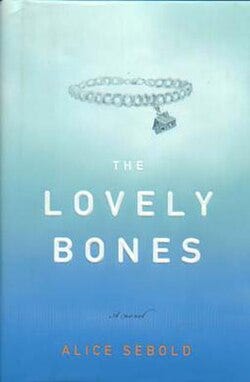
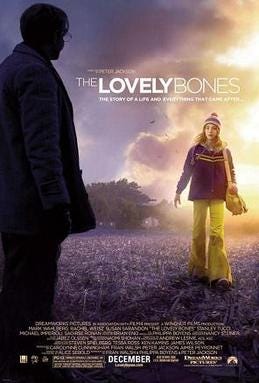
Didn’t see the movie, nor read the original novel some two decades past, but the novel's last words were placed beneath a fourteen-year-old upload, some eight years ago. What was the connection? Liz Fraser's soprano had been used in the movie version. I had never known her name in the 80s.
Ages ago, but ages after my baptism, people re-frame an important song in places emotionally key, these underpin the world, which has no other evidence but these feelings we self, and world, even without us.
Recently I revisited my decade old writing about a rejected story I wrote for an anthology of clockpunk fables (that was the brief). Rejected because the story lacked character development, something which traditional fables do not have.
In the last two hundred years and especially since the second world war English literature has been dominated by the requirement of character development. It is easy to see this as moral development, that all literature and storytelling should be a showcase of Pilgrim’s Progress object lessons. Even if you are dead, as The Lovely Bones portray.
Fables have morals-of-the-story of course, but not _in_ the story, that process happens in the reader or hearer who apprises themselves of the allegories and whatnot, as prompted by the moral. Modern literature wishes to show not tell, thus inculcate that change in reader who by losing them selves in a story arc, re-generate their selves or save their own souls (a protestant endeavour no doubt). People do this anyway so I am not sure why it has to be formulated this way, worlded this way, in ‘literature’. Indeed the repressed returns in criticism where all sorts of morals-of-the-story suddenly re-appear like mushrooms after the end.
I still have not read the novel nor seen the movie The Lovely Bones, but at least it has a moral, as well as the efforts of worlding, even without me in it.
"These were the lovely bones that had grown around my absence: the connections—sometimes tenuous, sometimes made at great cost, but often magnificent—that happened after I was gone. And I began to see things in a way that let me hold the world without me in it. The events my death brought were merely the bones of a body that would become whole at some unpredictable time in the future."
We can world even without our selves, even without us there at all.
References:-
Sebold, Alice. The Lovely Bones. Boston: Little, Brown, 2002. 0-316-66634-3.
Shurikova, Yana. “The Lovely Bones (2009).” Blog. The Curly Echo. 13 Oct. 2014. Web. [contains the song list for the movie].
Shearer, Joe. “The Lovely Bones.” Substack newsletter. Film Yap. 14 January 2010. Web. [Movie review]
This Mortal Coil - Song To The Siren (Official Video). 4AD. 2013. Web.
This Mortal Coil-Song To The Siren Lyrics. IAmSingingPanda. May 2, 2012. Web.
Moral of the story
Restricting or excluding stories because of their lack of character development, is an organisation urge, a worlding activity. It is an editor’s right even if they do not know what they are doing when asking for fables.
But the world doesn’t care what we organise, merely that we do, or, at least, merely that we make an effort, or even… —that we, at the very least, feel we should make an effort.
Change cannot be contained within our efforts, nor made exclusively by our efforts or virtues, however our worlding allows that to be, even without us, the world goes on.
Romantic worlding is a subset of worlding, literature begins in romances religiously constrained but meta-literary in origin, modern literature with its urge to over-specialise in character developed (show-don’t-tell hero-worship) has over-egged the cake (which may not look like a mixed-metaphor, but it is —deliberately so).
Moral development is also a subset of worlding, but they do not feel the same. See how it goes.
Because various outcomes of worlding feel very different we do not think of them as the same thing. Here Freud’s narcissism of minor differences comes to bear on all our efforts.
As opposed to Narcissism’s major inability to tell the difference between the world and themselves, (but love to boundary ride difference into control and power). Narcissists are the ultimate romantics, but feel nothing for the world.
Crossposted at whyweshould.loofs-samorzewski.com
"The word romantic was widely applied to emotional, artistic, and philosophical contexts, celebrating the irrational, the emotional, and the mysterious.
It was also used to describe sentimental or idealized views of love, relationships, and nature.
Additionally, romantic began to describe someone who is sentimentally idealistic, often impractically so, about love or life."
I am a sincere admirer of your art.
They say people are drawing or painting or writing for themselves;
but it is not true.There is, as it should be, somebody in the world ,this passionless world which does not care,for whom all your deeds matter.And not necessarily this is a journal's editor-in- chief.It may be anyone else hiding himself behind the corner.
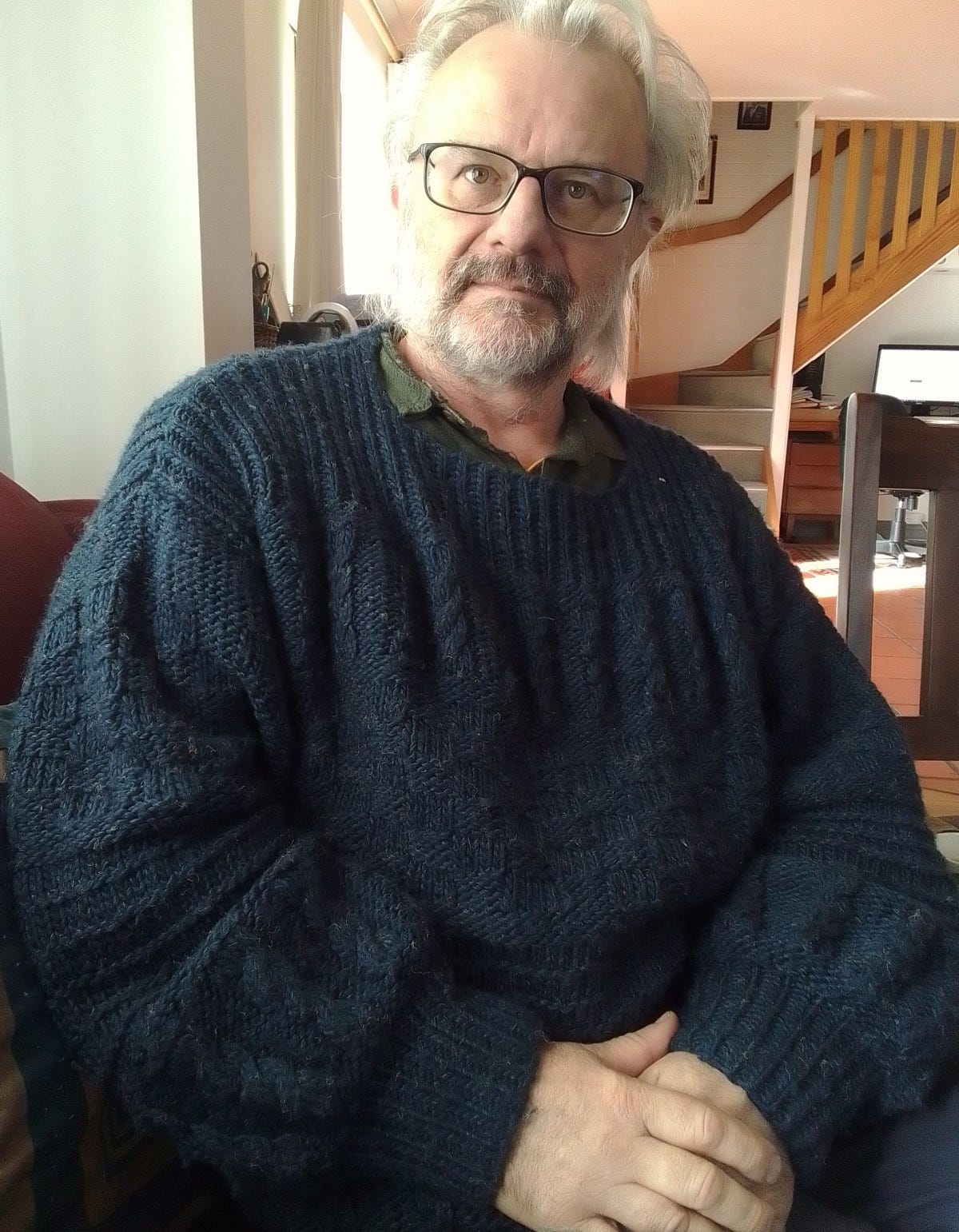
I love your portrait so much,and the sweater is the real masterpiece.It shows love could be practical
sometimes.