
Copyright

This essay began as a short statement reflecting on copyright. It ended up with the following TL;DR :-
What makes us human are meetings.
What makes us individually human is the ability to copy, whether we want to or not.
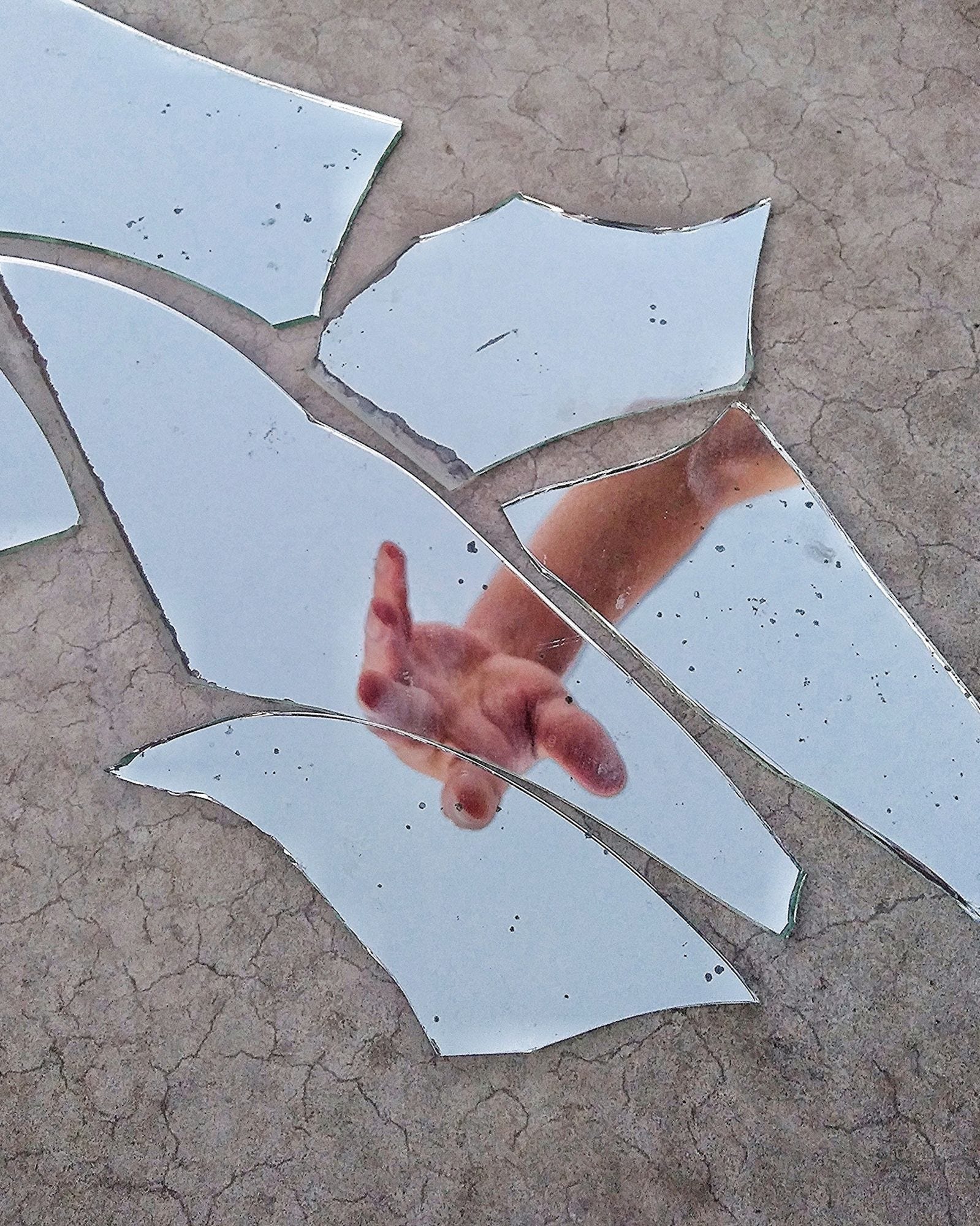
Reflecting on this I wondered if I had to go and read Girard and mirror his mirror pomo pools of … —nothing. Fuck that! I said.
The current context is of the mid-2020s, of LLMs and generative algorithms as they regurgitate the mapping they have made of our social learning, from our records (writing, images, etc).
But I do no think that the argument I have held on copyright for some time is much changed by the recent blooming of a thousand groks slopthinking their backers’ narcissism.
The argument is of a economic point of view about interests, i.e that study of a base objectivity, where we teach ourselves that we are not taught to be selfish. Something easily copied and mirrored by the actually selfish wishing to normatively state their preferred normality, and difference as hypocrisy. The worst sort of worlding.
So, ostensibly this post is about the way we as a social learning species copy each others mistakes is a basic feature of worlding the self, (which some reduce to mirroring, i.e. a type of narcissism in which the pool stares at the fool). But it began with my views on a legal fiction, copyright, and layers of tale-telling including reform, revolution and disruption, and so draws in my preferred stratigraphic metaphor for complexity Taphonomy (rather than genealogy or more structuralist fantasies).
It gets to work by series of reflections. It does not need fold out into a map. It’s more like a pastry dough, which hopefully delaminates while being baked into a flakey crust just before you eat it.
The past is a foreign mirror
First some historical assumptions (mostly within the scope of my badly informed notices of English law).
Copyright arose as a way to protect investment in plant and machinery. Previous to the rise of the printing press, attribution was important, and copying was primarily an industry of labour and materials. To get a copy you had to pay someone else to make you a copy, by hand, if you couldn’t do it yourself. Or buy a literate slave to get it done.
Thus there is no need for copyright until machinery made it easy to copy stuff. Attribution was all you needed.
Sometimes (Japan) proselytisers would use machines to quickly reproduce texts with missionary zeal (Buddhist blockprinting) but the locals reverted to buying posh hand-written works once that early enthusiasm had past.
Copyright is based on the right to copy, because machinery, and not so much because of any effort of creativity, or genius. Before machines copied material you might get a wage copying books, but outside of a monastery or noble house, it was unlikely to make you an economic giant.
Over time this protection of the right to copy particular texts in return for a capital investment has been overlain with other matters, primarily publishing as a business activity separated out from physically printing as a core business, as marketing channels became more important than the printed presses. Books. Magazines. Newspapers.
This no doubt co-evolved with a sense that the “original” copyright holder is still the creator, unlike the investment plant and machinery which created the law whose true power is hidden, and, perhaps these heros were represented by their fabled widows and orphans in systems which have crap or no social welfare support. Perhaps they were even mentioned in speeches in parliament when laws of copyright were brought in to protect investments in printing presses. Of course some people come to believe in that ideological overlay is the primary cause, which it isn’t.
This belief has now evolved and we have come to speak of creators ‘reserving the moral right’. This further splits the copyright into a monetised portion, to be bought and sold, and a attributive portion which can hang around like a bad smell.
First reflection
Now, reform is better than revolution, but as we are currently witnessing, reform can be undone by narcissists surfing fear and hate. It is in these conditions the original framing of a concept, like copyright (which currently creators think of as their thing) can revert to its original form, if not exactly the same in detail, it is in the same old unquestioned because unseen frame.
Like I mentioned above, at the moment it is “AI” and the use of large language models (for example) in mapping the record of our social learning in producing generative “AI” platforms. Those investing in the platforms (LLMs vectorspaces as printing presses) are seeking to protect their investments. They may even think it is disruptive, when it merely repeats capitalism’s appetite, to use a marxist term, for “creative destruction“ (though I would argue Shiva was there first). When techbros talk about disruption, this is the type of revolution they mean. LLMs disrupt the earlier settled patterns created in response to other disruptions (though they may call them opportunities when hindsight allows, and progress when there is a series of them which societies cope with — sorta).
The overlay that has reformed the right to copy (a monopoly license granted by the crown) to be something like a recognition of an act of creative effort and skill (“reserve the moral right”) in which the pecuniary element can be sold as a right to copy but not the bad smell. Attribution returns in the form of a spiritworld egoist.
So, I ask, has that overlay of the “moral right” extinguished the underlying conceit of a “right to copy” for owners of macines? Legally, structurally, or narcissistically?
Anyway as the techbro boys break things and run away thinking they are heros (the hero as artist), and others (the artist as hero) fights the good fight in the name of copyright for artists and writers and other creatives, NEITHER hero/artist nor artist/hero undoes the original frame which caused this mess in the first place. We need a much wider conversation, which may well impossible when the boys are ennabling narcissism so that they will break even more stuff. I would suggest that defending copyright, or defending via copyright, is potentially arguing about deckchairs on the Titanic.
Not because of skynet, but because we are weak in the face of ourselves.
An investment in algorithms, like the investment in printing presses a century and more ago, is more important than an interim reform of copyright being identified with the creative effort and skill of the artist as hero. An over-rated concept in any case. An investment in machinery gave as copy-right, reform reserves us then a moral right, but current disruption shows us its weathered bones on the reserve.
Yes, everyone is an artist. Everyone is an artist, not because they hold the rights to their own copy (how weird that looks) to their own creative effort and skill as “copy”. But because they copy. Not because they hold copy. Not because they sold copy. And especially not because they sold the labour which gave someone else the “copy”.
Creativity is not an act, like some heroic deed. Creativity is the humdrum course of worlding. Of worlding the self among others doing the same, among a social learning species who copy and pastes and labels and wears and styles and refreshes and designs and makes and do and dances and cooks and performs and feasts and schools and groups and clubs and plays and sports and loves.
What makes us human are meetings. What makes us individually human is the ability to copy.
The proof of this is, if you actually do something original no one else will ever know.
Until someone comes along to promote/publish/curate/research it, it’s the copying that worlds. Copying is a ritual of worlding. Worlding must be done with others. Creativity itself is a ‘no thing’, especially where the process is disregarded, and the output is enshrined. The effort and the skill can be rewarding itself, but that reward is not a market, it is no forum.
Second reflection
This very bad potted history of copyright, as protected investment in machinery with the fig-leaf of creators’ genius, arises in ancient legal notions of equity (legal concept equity some might call Ur-capital), which are feudal in framing. Besides the frantic calls for loyalty, the primary divider of the world was the ownership or control of land, and everything on it. Land is a type specimen of capital, even if, as real estate, it is not very portable. But people need somewhere to live, and if you control the land militarily as a caste, then you can then create laws that enfeoff your control by enslaving their labour if not their lives (amid calls for loyalty). Please pay two days of labour as rent to be a loyal tenant of the land lord. (I’ll expand another day on the Master/Servant relationship as the inverse to the land lord tenant.)
You don’t control the land even though your ancestors have lived here for thousands of years just fine, therefore you do not own it therefore it is only right that you pay rent. Makes perfect sense legally. This is why if you improve your rental property you don’t get remunuerated, despite your labour and costs, it is owned, captured, capitalised by the land lord.
Copyright actualy reiterates that relationship. The control of machinery controls the market, your desire to eat must be met through that market of machines, so you get a sliver of income out of the turnover that is needed to make the machines turn and rumble, as a content provider. One day, after some exposure they might call you a genius. More likely this is after you are dead and someone better at marketing discovers you. If at all.
But its better than nothing right?
The reforms of copyright for the creator into the moral right, or residential focus for the ‘tenant’ in reforming landlord tenant laws, would be better safeguarded if they also caused a change in the basic arrangments. But reform never quite gets there, while revolution is wisely avoided as it re-hashes violently what reform seeks to remove. However. reform with a wider frame might create more stable civilisations. Reform should re-iterate better, rather than merely tinker with name changes in overlaying feudal concepts (for example).
Concepts like Marx’s theory of the alienation of labour by capital do not help here as they double-down on the social construction, even as they disagree with its effects. New laws, new arrangements should be built up from scratch. It is unfortunate that the only legal types to engage in this type of law-based entrepreneurialism are tax avoiders. It is also unfortunate that the common law is quite restricted or non-existent across jurisdictions. Napoleon’s enlightenment is no real help here. As an anarchist I am quite fond of common law as an avenue of experimentation.
Common law is a type of anarchism, pity about equity really, and the warlords that give equity its frame.
smashed mirrors
Copyright has protected a certain style of production of artists as heros, which some seek to protect, if only because they labour. But why not just protect the labour directly? How many publishers end up with a long tail of copyright in their control? Why did Disney keep extending its IP? Did the widows and orphans of the labourer who first created Steamboat Willie see any of that cash generations later? In case why should anyone privately benefit generations later? The public domain must always be the there, even to these temporary heros. Disney’s delay is the result of IP schemes. How would they delay it otherwise?
Worlding well without getting sucked into the over-fitted details, the potholes of globally suboptimal but locally optimal solutions (like copyright) can be overcome by a social learning species where we world more, well, worldly.
When some defend art, (or religion, or the nation) either spiritually or belongingly, they are really promoting worlding for which they have the wrong name, the wrong transitonaly object.
The abstraction kills its babies in the name of its darlings.
Attribution
Part of the moral right overlay seeks to address attribution, and attribution is a much older idea than copyright and operates in a part of worlding that is not entirely economic, but might be when things get monetised or capitalised or tribute-ised or corrupted or tik-tokked or whatever. I’ll create a separate post on that. It might cover plagiarism and whatever the word is for publishing something which is attributed to someone famous, and can be more like fan fiction than fraud.
The numbers
There is a notion of twenty years ago called the long-tail, where digital platforms couuld provide endless options once digitised, and there was much discussion of the grey-zone of orphanned works before they hit the public domain. It would be an interesting economic study to count up all the works held in copyright compare them to their average and median worth.Which is probably near to nothing, so why bother with copyright at all.
Compare that situation with the generative powers of today, the cost and energy is not nothing, but it is a second order of endlessness. The source material which was mapped to produce this engine of production, rather than mere copying, will become an insignificant part of it. That none of it has copyright attached, this is a blessing.
Perhaps this will allows us to begin to discuss worlding sensibly in the realm of creativity, and the copying that makes us individually human.
Crossposted on whyweshould.loofs-samorzewski.com
A technological worldview that recognizes only what can be quantified will inevitably treat life as secondary. What cannot be measured becomes negotiable. What cannot be optimized becomes inefficient. This need not arise from somebody's malice intent; it emerges naturally from technology's abstraction.
"Concern for man himself and his fate must always form the chief interest of all technical endeavors… in order that the creations of our mind shall be a blessing and not a curse to mankind.” — Albert Einstein
Wonder why did you choose this picture to illustrate the post?
Whether consciousness is something that can ever be produced by a single person at all, rather than merely mirrored, or represented in the terms such as
"this is not FROM me, it came THROUGH me" ???